

Click here to watch the video!
You have trained your team to upsell every dish, but your average spend is still flat. Guests are walking out having not had dessert, and the reason is simpler than you think. You are making them feel rushed at the very moment they should be relaxing.
I’m Tom Dimelow, a restaurant and business coach. I specialise in developing systems and implementing processes that transform restaurants into must-visit locations, driving higher profits and fostering engaged teams.
To run a restaurant successfully, you must master a subtle psychological hack and create “wow” moments that allow you to anticipate your customers’ needs before they even know they exist.
Mastering this single step encourages people to stay longer, leading to increased sales and more repeat business. It is not about service, it is about hospitality. Service is a desperate server. Hospitality is a host who creates a relaxed environment where guests are more likely to spend more.
The One Rule is simple: establish a clearly designed Service Journey.
This isn’t a script. it’s a framework that becomes muscle memory for your team. When your staff know exactly how the experience should unfold, they deliver it effortlessly, which builds trust and relaxes your guests.
There are three critical moments in your Service Journey where most restaurants lose money:
- Early engagement: The first 60 seconds when guests arrive
- Pre-dinner drink sales: The moment before menus create choice overload
- Dessert sales: When guests need permission to stay
Master these three elements within your Service Journey, and you’ll see average spend increase naturally. Let me show you how.

Step #1 of Your Service Journey: The 60-Second Rule
Nobody arrives for dinner hungry. Often, guests arrive stressed, worried, or anxious. They might be on a first date, a family dinner they don’t really want to be at, or a special occasion they hope will be perfect. These feelings affect the way they perceive their experience without any input from the restaurant itself.
You have about 60 seconds to reduce the guest’s stress level. A simple acknowledgement early on, rather than letting them wait at a host stand, communicates a “we’ve got this” vibe.
Your customers are constantly assessing pace and pressure. If they feel rushed, they behave in “safe” ways and default to low-value decisions.
The Psychology of the Guest:
- Stressed Guests: Likely to make logical, defensive decisions, leading to just a main course and a glass of tap water.
- Relaxed Guests: More likely to make emotional and discretionary decisions.
Hospitality is about reducing the cognitive load, not increasing sales pressure. When you communicate that the guest is in safe hands early on, they are more likely to say yes when you offer pre-dinner drinks.

Step #2 of Your Service Journey: Pre-Dinner Drinks Without Choice Overload
Menus create effort and hesitation. Choice overload research demonstrates that the more choices you give someone, the harder it is for them to make a decision.
If you offer a drinks list with 32 gins, they will probably default to one glass of wine or a beer with the main course.
To encourage the pre-dinner drink, follow these three steps:
- Limit the number of choices.
- Offer verbal suggestions.
- Assume the guest is going to buy a drink.
How it works in practice:
Don’t approach with big cocktail menus. Instead, sit the guests down and immediately ask, “What can I get for you to drink whilst you look at your menus? Can I get you a gin and tonic, a vodka tonic, a glass of champagne, prosecco, or a beer?”. Let that pause become the ordering space.
If they choose a gin, assume the double. You are setting a “norm” that makes them feel part of the clan.
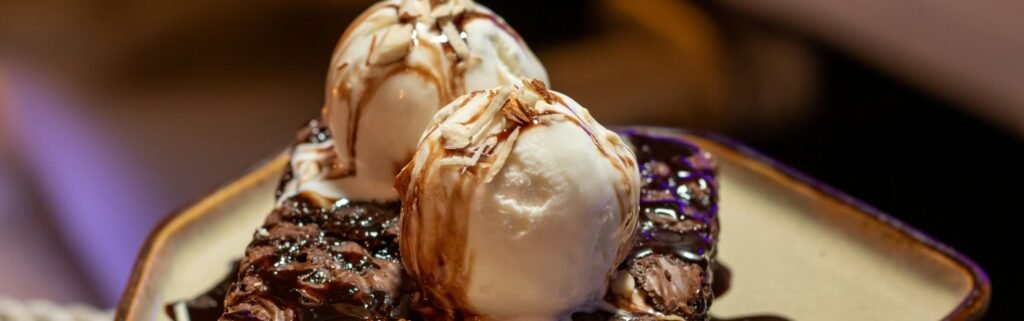
Step #3 of Your Service Journey: Maximising Dessert Sales
Most dessert orders are lost because the guest feels rushed, not because they aren’t hungry. When you clear a table with your arms full of dirty dishes and wave a menu around, you are inadvertently communicating that it is time for them to move on.
To maximize dessert sales, use these steps from the Service Journey.
- Clear the table in its entirety: No one feels comfortable sitting around mess.
- Provide space: By clearing the table first and then returning with a menu, you demonstrate there is no urgency to leave.
- Use personal recommendations: Say, “I really recommend the chocolate fudge”. A personal recommendation from someone the guest trusts always outperforms a perfectly worded menu description.
Desserts and coffee rely on emotional comfort. Guests need permission to stay and chill. By giving them space and assuming they will have a dessert, you open the floor for them to stay without feeling they are in a hurry.
Bringing It All Together: Why the Service Journey Works
Now you can see how these three elements work together within your Service Journey. As I mentioned at the beginning, the Service Journey is the framework that ties everything together. This is a journey, not just for your guests, but for your restaurant’s evolution.
A clearly designed service journey gives your team certainty and consistency. It allows the staff to deliver the experience effortlessly, which gives the guest confidence that you are on top of things.
The Core Principles:
- Train the journey, not a script: Consistency builds trust, and trust relaxes your guests.
- The Three Vital Moments: Focus on The Beginning, one WOW moment in the middle, and The End.
- Muscle Memory: The less the team has to focus on the technical steps, the more they can focus on engaging with the customers.
Conclusion: Designing Hospitality
Restaurant management is not about upselling, it is about designing hospitality. When you master the basics of restaurant management by following a clearly designed service journey, your guests stay longer, spend more, and return more regularly.
Ready to increase your average spend?
If your guests are still walking out without ordering desserts or pre-dinner drinks, my free 5-minute assessment will show you exactly where your sales process is breaking down.
You’ll receive a personalized report that pinpoints your hidden blind spots across four key areas: accounting, sales (including average spend and conversion), hospitality, and training.
Leave a Reply